
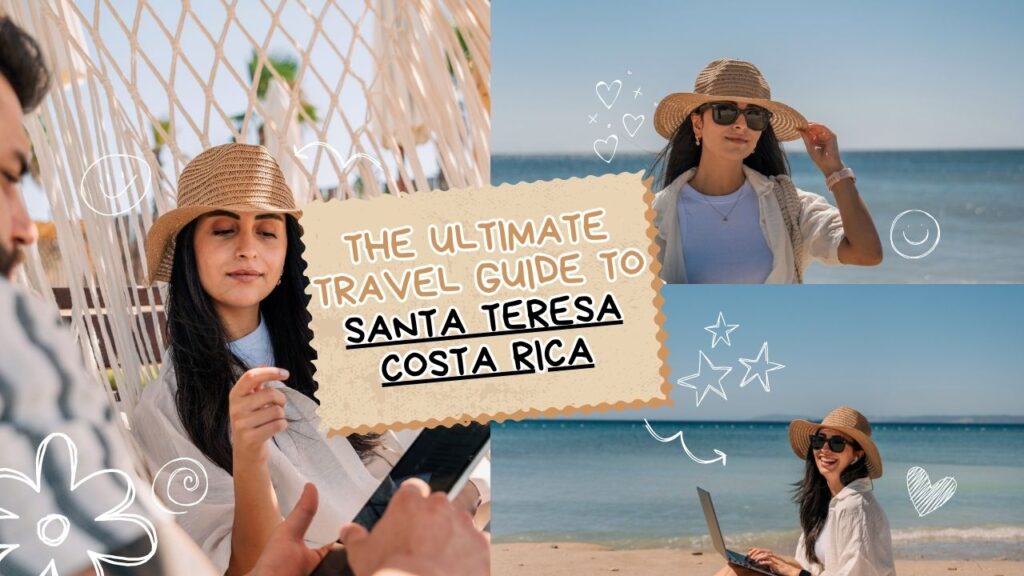
Santa Teresa Costa Rica: Why Every Traveller Is Talking About This Place
There is a small stretch of Pacific coastline on the tip of Costa Rica’s Nicoya Peninsula where white-sand beaches meet jungle-clad hills, where world-class surf meets world-class yoga, and where the phrase ‘Pura Vida’ is not just a slogan — it is a way of life. That place is Santa Teresa, Costa Rica.
Once a sleepy fishing village, Santa Teresa has quietly become one of Central America’s most sought-after destinations — attracting surfers, digital nomads, health-conscious travellers, and anyone craving a slower, richer life. It has been called ‘The New Tulum’ and ‘Costa Rica’s answer to Bali.’ But Santa Teresa is entirely its own thing. Dusty roads, wild waves, palm trees at sunset, and a community of creative free spirits who found their paradise and refused to leave.
This guide covers everything you need to plan a perfect trip — from the best time to visit and how to get there, to where to stay, what to eat, and the top things to do. We have combed through every insider tip so you don’t have to.
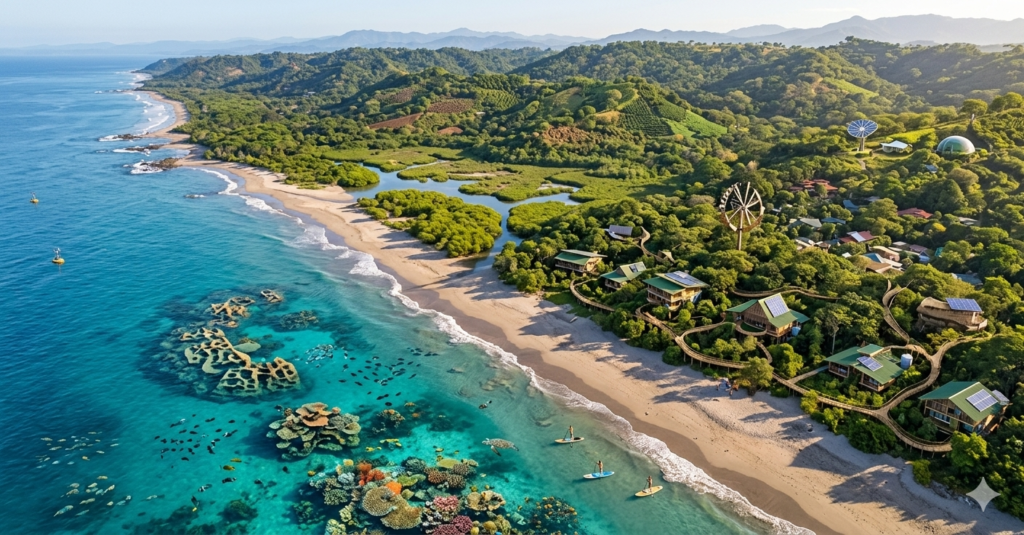
Where Is Santa Teresa, Costa Rica?
Santa Teresa sits at the very southern tip of the Nicoya Peninsula — one of Costa Rica’s most remote and scenic regions. It is part of Puntarenas Province and neighbours the towns of Mal País to the south and Playa Carmen to the north. Together these three areas form a continuous strip of coastline that most visitors simply call ‘Santa Teresa.’
The town itself is essentially one long main road running parallel to the Pacific Ocean, flanked by surf shops, open-air restaurants, yoga studios, boutique hotels, and lush jungle on either side. Turn off the main drag and you’re instantly in the wild — which is exactly the charm.
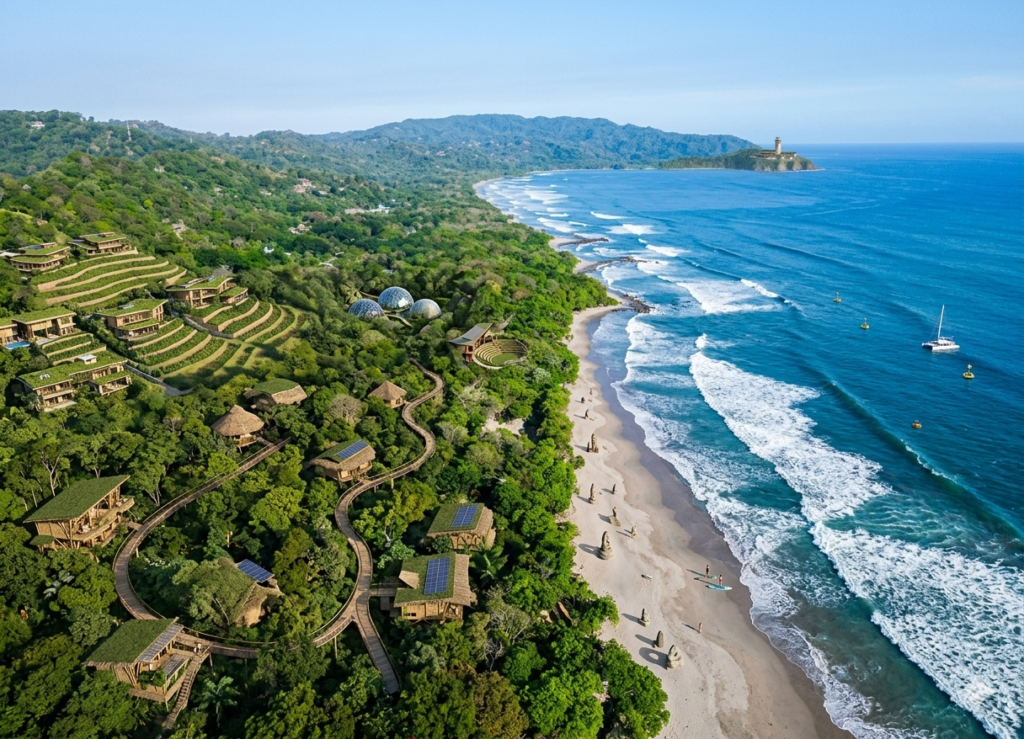
Santa Teresa is located on the southern tip of the Nicoya Peninsula — remote but worth every kilometre
Best Time to Visit Santa Teresa Costa Rica
Costa Rica has two distinct seasons, and knowing which one aligns with your travel plans will make a huge difference to your experience in Santa Teresa.
Dry Season: December to April (Peak Season)
This is the best time to visit Santa Teresa. Expect consistently sunny skies, temperatures around 28–35°C (82–95°F), and minimal rainfall. The sea is at its most inviting, and the surf conditions are excellent. January through March is particularly popular — book accommodation well in advance if you’re travelling during this window.
Wet Season: May to November (Green Season)
The wet season brings lush, intensely green jungle landscapes, fewer crowds, and lower prices. Rain typically falls in heavy afternoon showers rather than all-day downpours, so mornings are often beautiful. September and October see the heaviest rainfall — many travellers prefer to avoid these months. However, surfers sometimes love wet season for the powerful, uncrowded swells.
| Month | Weather | Crowds | Surf | Price |
| Jan–Mar | ☀️ Dry & Hot | Very High | ★★★★☆ | $$$ |
| Apr | ☀️ Warm | High | ★★★★★ | $$$ |
| May–Jun | 🌦 Mixed | Low | ★★★★☆ | $$ |
| Jul–Aug | 🌦 Rainy | Medium | ★★★★☆ | $$ |
| Sep–Oct | 🌧 Very Wet | Very Low | ★★★★★ | $ |
| Nov | 🌦 Mixed | Low | ★★★★☆ | $$ |
| Dec | ☀️ Turning Dry | High | ★★★★☆ | $$$ |
Santa Teresa month-by-month at a glance — dry season offers the best all-round experience
| 💡 Insider Tip: Go in January January is the sweet spot — the dry season is in full swing, temperatures are in the 32°C (90°F) range, the sea is warm, and it’s noticeably quieter than February and March when spring-break crowds descend. You’ll still find great accommodation availability and you’ll pay slightly less than peak rates. |
How to Get to Santa Teresa, Costa Rica
Getting to Santa Teresa takes effort — but that effort is part of what keeps it special. There is no airport in Santa Teresa itself, so you have options depending on your budget and sense of adventure.
Option 1: Fly into Liberia (LIR) — Recommended
Flying into Liberia (Daniel Oduber International Airport) is the most popular option for international travellers. From Liberia, you can:
- Hire a private shuttle or driver (approx. $250–$320 one way for 2 people; roughly 3.5–4 hours). This is the most comfortable option and allows you to see the countryside.
- Rent a car — a 4WD SUV is strongly recommended. Roads into and around Santa Teresa are unpaved, steep, and can be rough, especially in wet season.
Option 2: Fly into San José (SJO)
San José is Costa Rica’s main international hub. From there it’s approximately 5–6 hours by road, or you can take a domestic flight on Sansa Airlines to Cobano (~40 minutes from Santa Teresa). Note: Sansa flight schedules can be unreliable and subject to last-minute changes, so always have a backup plan.
Option 3: The Ferry Route (Budget-Friendly Adventure)
From San José or Liberia, take a bus or drive to Puntarenas, board the Naviera Tambor ferry across the Gulf of Nicoya (~1.5 hours), then continue by bus or taxi to Santa Teresa. This takes most of a day but is a scenic, affordable adventure loved by backpackers.
| ⚠️ Important: Book Transfers in Advance Private shuttles from Liberia book up fast in high season — especially around Christmas, New Year and March. Reserve yours at least 2–3 weeks ahead. The roads into Santa Teresa are genuinely rough; a 4WD is not optional, it’s essential. |
Getting Around Santa Teresa
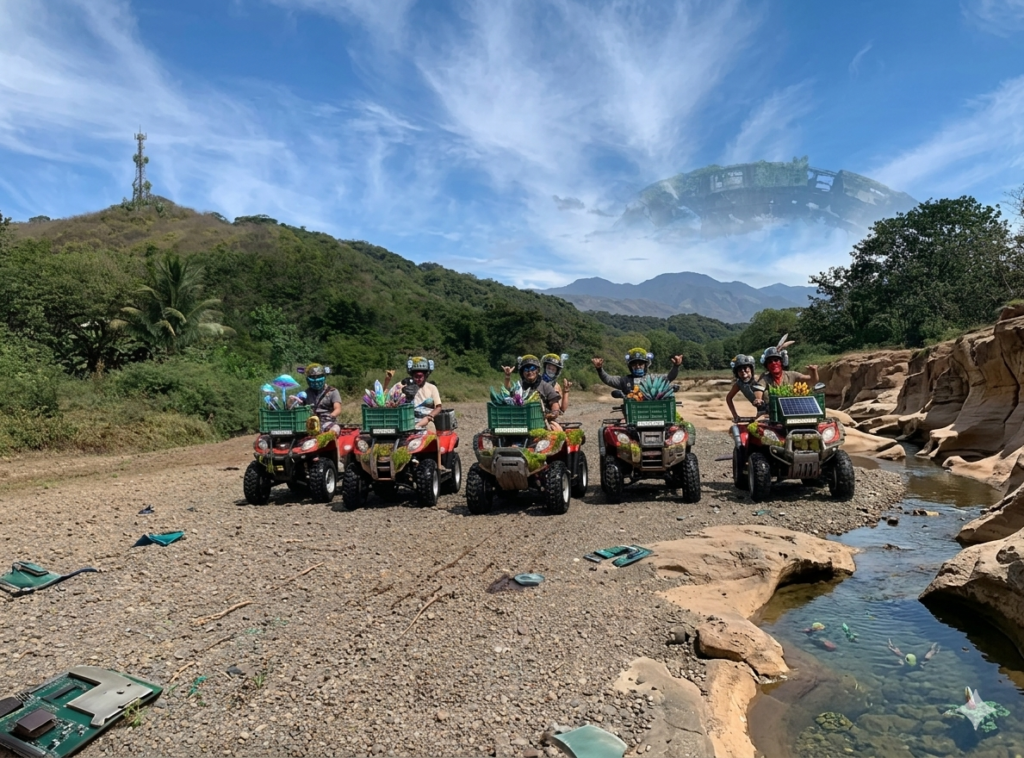
Once you arrive, the most fun — and most practical — way to get around is by ATV (quad bike). About half the traffic in Santa Teresa consists of ATVs zipping up and down the main road and jungle tracks. They are four-wheel drive, can handle the rough roads, and make exploring surrounding beaches much easier.
- ATV / Quad Rental: $50–$70 USD per day. Most rental shops offer weekly deals.
- Motorbike: Popular with solo travellers. Cheaper than ATVs (~$25–$40/day).
- Bicycle: Great for short distances along the main road — free if your accommodation provides one.
- Taxi: Available for airport transfers and occasional trips; agree on the price beforehand.
- Walking: The main strip is walkable but dusty and hot — always carry water.
| 🧣 ATV Riding Tips Wear sunglasses (or goggles) and a bandana or face mask — the dust from unpaved roads is intense. Closed-toe shoes are recommended. Always check that your ATV has working brakes before heading uphill. Most rental shops include basic insurance. |
ATVs are king in Santa Teresa — the most fun and practical way to explore the coastline
The Beaches of Santa Teresa
Santa Teresa’s beaches are the heart of everything. Stretching for miles along the Pacific, they offer a mix of powerful surf breaks, peaceful tide pools, and jaw-dropping golden sunsets. Here are the main beaches you need to know:
Playa Santa Teresa
The main beach and the beating heart of the town. A long, wide stretch of golden sand with consistent waves that attract surfers of all levels. The beach is never overcrowded — even in high season you can find a quiet spot. Sunset here is unmissable: the sky turns every shade of orange, pink, and purple over the open Pacific.
Playa Carmen
Just north of Santa Teresa, Playa Carmen is where the main road meets the sea. Calmer than Playa Santa Teresa in spots, it’s ideal for beginners learning to surf. A cluster of surf schools operate here, and the beach is popular for morning yoga sessions.
Playa Hermosa
Head north on your ATV and you’ll reach Playa Hermosa — a wild, largely undeveloped beach with powerful waves. The name means ‘beautiful beach’ and it delivers. Far fewer visitors make it here, making it perfect for those who want solitude and raw natural beauty.
Playa Manzanillo & Mal País
Continue south past Carmen towards Mal País and you reach Playa Manzanillo — rocky tide pools, colourful fish, and extraordinary snorkelling await. The area transitions into a nature reserve teeming with wildlife. Keep your eyes open for howler monkeys, scarlet macaws, and iguanas.
Sunsets at Playa Santa Teresa are legendary — the Pacific sky puts on a show every single evening
Best Things to Do in Santa Teresa Costa Rica
Santa Teresa punches way above its weight when it comes to activities. Whether you’re chasing waves, seeking inner peace, or exploring wild nature, there is always something extraordinary to do.
1. Surf — The #1 Reason People Come
Santa Teresa is one of the most consistent surf destinations in all of Costa Rica, and indeed all of Central America. The beach break produces long, rolling waves ideal for learners, and reef and point breaks nearby challenge experienced surfers. The swell is reliable year-round, though dry season (December–April) is considered optimal.
- Complete beginners: Book a lesson at one of the many surf schools along the beach. Most offer 2-hour sessions with board rental included (~$50–$70 per person).
- Intermediate surfers: Rent a board ($20–$30/day) and head to Playa Carmen for consistent beach break, or explore Playa Hermosa for more powerful waves.
- Advanced surfers: Check out Punta Barrigona and the reef breaks south towards Mal País during big swells.
| 🏄 Surf Tip for Beginners The flattest, most forgiving section of the Santa Teresa beach break is in front of the Selina complex — surf schools use this area deliberately. Avoid the sections near rocks or reef until you’re comfortable. Rips can be strong; always surf within your ability level and check conditions with a local instructor first. |
2. Yoga & Wellness
Santa Teresa has established itself as one of Latin America’s premier yoga destinations. The combination of warm climate, natural surroundings, and a health-conscious international community has attracted world-class instructors and retreats from around the globe.
- Hotel Flor Blanca offers ashtanga yoga classes in an open-air shala overlooking the beach — the sound of waves during practice is genuinely transformative. Drop-ins welcome; arrive 20–30 minutes early.
- Nautilus Boutique Hotel and several independent studios offer vinyasa, yin, and meditation classes throughout the week.
- Multi-day and week-long yoga retreats are popular — book these months in advance as they fill up quickly.
- Holistic offerings including cacao ceremonies, sound healing, and breathwork are available — check local noticeboards and Instagram pages.
3. Explore the Coastline by ATV
Renting an ATV is not just transport — it is an experience in itself. Drive north along the coast, stopping at deserted beaches, jungle tracks, and hidden viewpoints. The road to Montezuma waterfall (about 45 minutes north) is a highlight: a spectacular multi-tiered waterfall where you can swim in natural pools beneath a jungle canopy.
4. Watch a Sunset (Every Single Evening)
Santa Teresa’s sunsets are considered among the most spectacular in Costa Rica — possibly Central America. The western-facing beaches catch the full drama of the Pacific sky at dusk. Join the locals and visitors who drift towards the beach each evening with a cold Pilsen (Costa Rican beer) or fresh coconut. The skate park by the beach is a popular sunset spot, often accompanied by live music.
5. Snorkelling & Marine Life
The rocky tide pools at Playa Manzanillo and the waters off Mal País offer excellent snorkelling. Colourful tropical fish, sea turtles (which nest on these beaches), rays, and the occasional reef shark can be spotted. Several operators offer snorkelling tours to offshore rocks (~$40–$60 per person).
6. Hiking & Wildlife Watching
Santa Teresa borders the Cabo Blanco Absolute Nature Reserve — Costa Rica’s first protected area. Established in 1963, Cabo Blanco protects primary forest, deserted beaches, and extraordinary biodiversity. Hike to Playa Cabo Blanco for one of the most pristine beaches you will ever encounter, accessible only on foot through the reserve. Entry is approximately $12.
- Wildlife you may encounter: howler monkeys, white-faced capuchins, scarlet macaws, toucans, iguanas, sea turtles (nesting season July–November), caimans, and deer.
7. Fishing
Deep-sea fishing off the Nicoya Peninsula is world class. Yellowfin tuna, mahi-mahi, wahoo, and marlin are all found in these waters. Several operators in Santa Teresa offer full-day and half-day fishing charters (~$400–$600 for a private boat for 4 people).
8. Horseback Riding
Explore the jungle trails and beaches on horseback — a wonderful way to experience the landscape at a slower pace. Several ranches offer guided rides of 2–3 hours (~$70–$95 per person) through jungle tracks and along the beach at sunrise or sunset.
Surfing at Santa Teresa — world-class waves, warm water, and some of the best breaks in Costa Rica
Where to Stay in Santa Teresa Costa Rica
Santa Teresa has accommodation for every budget — from basic surf hostels to some of the most beautifully designed boutique hotels in all of Costa Rica. One crucial insider tip: the north side of Santa Teresa (towards Playa Hermosa) is quieter and more peaceful. The middle and southern sections (near Playa Carmen) are livelier and can be noisy at night.
Luxury & Boutique Hotels
Mint Boutique Hotel — Adults Only
Widely considered the most stunning property in Santa Teresa, Mint was designed by Costa Rican architect Benjamin Garcia Saxe (Studio Saxe) and opened by a Swedish couple who fell in love with the area. Set high on a hillside with sweeping views of the Pacific Ocean, it offers just 5 individually designed rooms, each with a private rooftop terrace, king bed, enormous windows framing the ocean, and air conditioning. Guests enjoy an infinity pool, curated common areas, and a homemade breakfast each morning featuring fresh tropical fruits, pastries, and locally grown coffee. Located on the north side — perfect for those wanting peace and privacy.
Hotel Flor Blanca
A legendary Santa Teresa institution, Flor Blanca is a collection of beautiful open-air villas set right on the beach. Famous for its yoga program (one of the best in the country), it also offers an exceptional restaurant, spa treatments, and direct beach access. The architecture blends seamlessly with the surrounding jungle — rooms are spacious, beautifully crafted, and deeply calming.
Nautilus Boutique Hotel
Another top-tier boutique option on the north side, Nautilus features stylish rooms, an excellent in-house restaurant, a pool, yoga classes, and a genuinely welcoming atmosphere. Popular with couples and solo travellers who want comfort without pretension.
Mid-Range Options
Selina Santa Teresa
Part of the global Selina brand, Selina Santa Teresa is a large, well-organised property that has become a hub for digital nomads and younger travellers. It offers a mix of private rooms and dorms, a coworking space, pool, surf lessons, yoga classes, and a lively social scene. Conveniently located near the beach break at Playa Carmen. Great if you want to meet people and stay active.
Pranamar Oceanfront Villas & Yoga
A beautiful property right on the beach in the quieter north section, Pranamar is known for its excellent yoga and wellness programs, beautiful villas with ocean views, and organic restaurant. Popular with yoga retreat groups and couples.
Budget Options
Santa Teresa has a solid selection of hostels and budget guesthouses, particularly in the central section near Playa Carmen. Many offer basic but comfortable private rooms with fans (rather than A/C) for $50–$100 per night. Ask locally for the latest recommendations as smaller guesthouses change frequently.
| 🏨 Where to Stay in Santa Teresa: Our Verdict Stay on the NORTH side of Santa Teresa for peace and quiet — the central and southern sections are significantly noisier at night. Book 2–4 months in advance for January–March travel. Adults-only Mint Boutique Hotel is exceptional but books out very fast. Flor Blanca and Pranamar are the best options for yoga-focused stays directly on the beach. |
Luxury in the jungle — boutique hotels in Santa Teresa blend sophisticated design with raw natural beauty
Where to Eat in Santa Teresa Costa Rica
Santa Teresa’s food scene is genuinely exceptional and surprisingly diverse for such a small town. Expect an international fusion influenced by the expat community — Israeli, Italian, Japanese, and Mexican cuisines sit alongside fresh Costa Rican seafood. The healthy, light style of cooking suits the surfer-yogi lifestyle perfectly.
Best Restaurants in Santa Teresa
Koji’s — Japanese & Sushi
The most celebrated restaurant in Santa Teresa. Set under a canopy of large trees strung with fairy lights, Koji’s creates an atmosphere unlike anywhere else in town. The menu is Japanese-focused, with exceptional nigiri, sashimi, and creative fusion dishes. The Okra Sashimi Salad is a revelation, and the Seafood Fried Rice (with lobster, prawns, and salmon) is legendary. Reservations are essential — it is the only Santa Teresa restaurant where you genuinely need to book ahead.
Zula Restaurant — Israeli & Mediterranean
Owned and operated by two Israeli brothers who arrived and never left, Zula is a Santa Teresa institution. The falafel is some of the best you’ll find outside of Tel Aviv, the shakshuka is perfectly spiced, and the fresh smoothies are a non-negotiable post-surf ritual. The homemade schug (a fiery red hot sauce) will become a fixation. The mahi-mahi platter with hummus, coleslaw, and pita is one of the best-value meals in town.
Fishbar — Casual Seafood
True to its name, Fishbar keeps things simple and excellent. Grab a stool, order the wasabi tuna tartare, the whole red snapper, or the Mediterranean tuna salad, and watch the surf crowd roll in. Service runs on island time — lean into it.
Eat Street
For the most social and budget-friendly dining experience in Santa Teresa, head to Eat Street — a cluster of food containers and stalls near the beach where local vendors serve everything from tacos to fresh fish bowls to vegan wraps. It buzzes with life after the evening surf session and is the best place to meet other travellers.
Café Social
A local favourite for quick, fresh lunches. The smoothie bowls, fresh-pressed juices, and grain salads are popular with the health-conscious crowd. Conveniently located near Playa Hermosa, making it ideal for a post-swim refresh.
| Meal / Drink | Approximate Cost (USD) |
| Budget breakfast / lunch (1 person) | $10–$15 |
| Mid-range lunch for 2 | $35–$45 |
| Dinner at Koji’s for 2 | $60–$90 |
| Fresh smoothie or juice | $5–$9 |
| Local Pilsen beer | $5 |
| Cocktail at a bar | $10–$20 |
| Eat Street meal | $8–$14 |
Restaurant and food prices in Santa Teresa — note that Costa Rica is the most expensive country in Central America
Eat Street in Santa Teresa — the most vibrant, social, and affordable place to eat after a long day in the surf
Santa Teresa Costa Rica Trip Budget: What It Really Costs
Here is the most important thing to know before budgeting for a Santa Teresa trip: Costa Rica is the most expensive country in Central America. By a significant margin. Prices for groceries, accommodation, transfers, and dining are frequently comparable to — and sometimes exceed — prices in the United States and Europe. Plan accordingly.
| Expense | Approximate Cost (USD) |
| International Flights (return, per person) | $600–$1,200+ |
| Budget hotel / hostel (per night) | $60–$120 |
| Mid-range boutique hotel (per night) | $200–$350 |
| Luxury hotel (per night) | $350–$1,000+ |
| Private Liberia airport transfer (one way) | $250–$320 for 2 |
| ATV rental (per day) | $50–$70 |
| Surf lesson (2 hours, with board) | $50–$70/person |
| Breakfast or lunch for 2 | $35–$50 |
| Dinner for 2 (mid-range) | $70–$100 |
| Horse riding tour | $70–$95/person |
| Massage (1 hour) | $80–$120 |
| Sunscreen (local supermarket) | $18–$25 |
| 💰 Budget Tip: Bring Everything From Home Pack all the sunscreen, toiletries, and medication you need before arriving — prices in Santa Teresa supermarkets are 2–3x what you’d pay at home. A single bottle of sunscreen can cost $22 USD. Bring more than you think you need. |
Essential Santa Teresa Travel Tips
These are the insider details that make the difference between a good trip and a great one:
Money & Currency
- The official currency is the Costa Rican Colón (CRC), but US Dollars are accepted almost everywhere in Santa Teresa. Have a mix of both.
- ATMs are available in Santa Teresa but can run out of cash during busy periods — withdraw what you need early in the week.
- Credit cards are accepted at most hotels and restaurants, but some smaller places are cash-only. Always ask.
- Tipping is customary: 10–15% at restaurants, $1–2 per drink at bars.
Health & Safety
- Water: Tap water in Santa Teresa is generally safe to drink, but bottled water is widely available if you prefer.
- Mosquitoes: Use DEET-based repellent, especially at dawn and dusk. Dengue fever is present in some parts of Costa Rica.
- Sun: The tropical sun is intense. Apply SPF 50+ every 2 hours. Pack it from home — local prices are steep.
- Ocean safety: Rip currents can be strong at Santa Teresa beaches. If caught in a rip, don’t fight it — swim parallel to the shore until free, then angle back to the beach. Only surf or swim in areas appropriate to your ability.
- Medical: There is a basic health clinic (EBAIS) in Santa Teresa. For anything serious, Liberia has the nearest hospital.
Connectivity
- SIM cards: Buy a Kolbi or Claro SIM card at Liberia airport or in town. Data is affordable and 4G coverage is decent in Santa Teresa.
- Wi-Fi: Most hotels and restaurants offer free Wi-Fi. Selina has a dedicated coworking space with fast internet.
What to Pack
- Light, breathable clothing (linen, cotton) — it is hot and humid
- Swimwear (bring several sets — they don’t dry quickly in wet season)
- Reef-safe sunscreen SPF 50+ (bring plenty from home)
- Insect repellent with DEET
- Sandals and one pair of closed-toe shoes for ATV rides
- Lightweight rain jacket (especially for wet season)
- Portable charger / power bank
- Dry bag for beach and surf sessions
- Cash in USD and a travel card with no foreign transaction fees
| 📷 Wildlife in Cabo Blanco Reserve — scarlet macaws and howler monkeys in the jungle canopy |
Santa Teresa borders the Cabo Blanco Absolute Nature Reserve — home to scarlet macaws, monkeys, and pristine wildlife
Day Trips from Santa Teresa
Santa Teresa is a destination in itself, but the surrounding area offers compelling reasons to venture out:
Montezuma Waterfall (~45 min north)
A must-do. The Montezuma Waterfalls are a series of three cascading falls through the jungle, with natural swimming pools at the base. The trail from the town of Montezuma takes about 30–45 minutes each way through lush forest. Swim in crystal-clear fresh water beneath a jungle canopy. Going by ATV adds to the adventure.
Cabo Blanco Absolute Nature Reserve (~30 min south)
Costa Rica’s oldest protected area, established in 1963. Hike through primary rainforest to the spectacular, deserted Playa Cabo Blanco — accessible only on foot through the reserve. The wildlife encounters along the trail are extraordinary. Open Wednesday–Sunday, 8am–4pm; entry approximately $12.
Mal País (~10 min south)
The village at the very southern tip of the peninsula — even more raw and undeveloped than Santa Teresa. The rocky reef here creates powerful, fast waves ideal for advanced surfers. Playa Manzanillo’s tide pools are exceptional for snorkelling.
Cóbano (~20 min east)
The nearest town with a supermarket, ATM, pharmacy, and the small Cobano airport (served by Sansa Airlines domestic flights). Not a tourist destination itself, but an essential practical stop for stocking up on supplies.
The Vibe of Santa Teresa: What Makes It Special
More than the beaches, more than the surf, more than the food — Santa Teresa is defined by a feeling. It is a place where the phrase ‘Pura Vida’ (pure life) is lived rather than just said. Life slows down here in the best possible way.
The community is an extraordinary international mix — Swedes, Israelis, Argentinians, Brazilians, Americans, and Costa Rican locals (known as Ticos) all coexisting in a small town of roughly 3,000 permanent residents. Digital nomads work from café tables. Surfers compare wave reports over breakfast. Yoga teachers run sunrise sessions on the beach. Artists sell handmade jewellery on the roadside. The energy is creative, open, and welcoming.
Many visitors who come for a week end up staying for a month. Many who come for a month never leave. The land is attracting investors and visionaries — eco-lodges, organic farms, and conscious businesses are opening every season. Santa Teresa feels like Bali did a decade ago: on the cusp of something transformative, still raw enough to retain its soul.
If you are looking for a destination that genuinely shifts your perspective, not just your location — Santa Teresa, Costa Rica is it.
| 🌿 Pura Vida ‘Pura Vida’ — pure life — is the unofficial motto of Costa Rica, and nowhere embodies it more authentically than Santa Teresa. It means: don’t stress, enjoy the present, be grateful for what you have. You’ll hear it used as a greeting, a farewell, a response to ‘how are you?’, and an all-purpose expression of contentment. By the end of your first day, you’ll be saying it too. |
Frequently Asked Questions: Santa Teresa Costa Rica
Is Santa Teresa safe?
Santa Teresa is generally safe for tourists. The usual precautions apply: don’t leave valuables on the beach or visible in a parked car, be aware of your surroundings at night, and use reputable transport for airport transfers. The community is friendly and used to international visitors.
Do I need a car/ATV in Santa Teresa?
You don’t strictly need one — but having an ATV makes the experience significantly more enjoyable. The roads are rough and dusty, distances between the main beach and accommodation can be significant, and exploring beyond the main strip requires wheels. Budget $50–$70/day for ATV rental.
Is Santa Teresa good for non-surfers?
Absolutely. Yoga, hiking, wildlife watching, horseback riding, snorkelling, waterfalls, sunsets, and exceptional dining are all outstanding here regardless of whether you surf. Many visitors come purely for the wellness culture and leave having never touched a surfboard.
Is Santa Teresa expensive?
Yes — Costa Rica is the most expensive country in Central America, and Santa Teresa is one of its priciest destinations. Budget a minimum of $150–$200/day per person for a comfortable mid-range experience. Bring all your consumables (sunscreen, toiletries) from home — local prices are significantly inflated.
How long should I spend in Santa Teresa?
A minimum of 5–7 days allows you to settle in, explore the beaches, do a day trip or two, and actually relax. Many travellers find that a week flies by and wish they had booked longer. Two weeks gives a much fuller experience of what the area offers.
What is the nearest airport to Santa Teresa?
Liberia (Daniel Oduber International Airport, LIR) is the most convenient for international arrivals — approximately 3.5–4 hours by road. San José (SJO) is the main international hub but adds travel time. A domestic flight with Sansa Airlines to Cobano brings you within 40 minutes of Santa Teresa, though schedule reliability is inconsistent.
Final Thoughts: Should You Visit Santa Teresa Costa Rica?
Santa Teresa Costa Rica is one of those places that earns its reputation honestly. It is not perfect — the roads are rough, prices are high, and the logistics of getting there require planning. But once you arrive, once you feel that warm Pacific breeze and hear the waves crashing just beyond the tree line, everything else falls away.
This is a place for people who want to feel alive. For surfers chasing the perfect wave, yogis seeking transformation, food lovers exploring exceptional flavours, and anyone who has ever looked at their daily routine and thought: there has to be more to life than this.
There is. And it’s in Santa Teresa.
— Pura Vida —
| 📷 Aerial drone shot of Santa Teresa coastline at golden hour — Pacific Ocean and jungle |
Santa Teresa Costa Rica — where the Pacific meets the jungle, and Pura Vida is more than a phrase